Dementia makes me reflect a lot on how our minds and memories work – what remains, what disappears, and what returns again.
My father’s dementia has taken me on a journey into the workings of memory. One of the first things I noticed was how much more easily he could recall long-ago memories than things that had just happened. This is a common experience for people living with dementia. The reason may lie in the way dementia affects the brain: the hippocampus – essential for forming and storing new memories – is often one of the first areas to deteriorate. In contrast, older memories are stored in the cortex, which tends to be more resilient in the earlier stages.
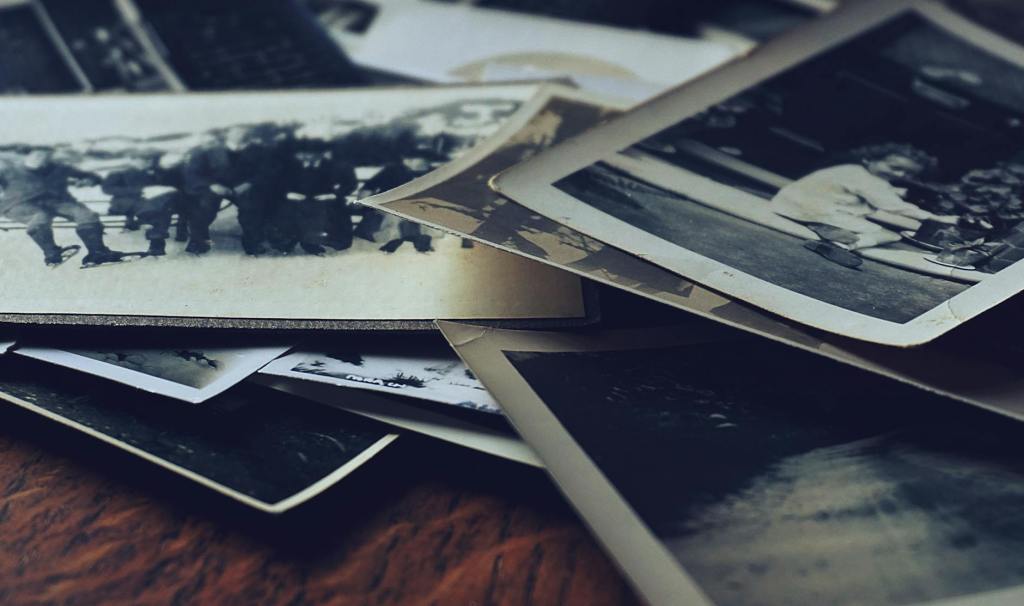
As a result, many people begin to “time-shift,” seeming to live more in the past than in the present. It’s not necessarily confusion – it may be their way of making sense of the world, using the memories that are still accessible. I find the idea of time-shifting beautiful in its own way: as though we could gently lift the present like a blanket and find the past still lying underneath, quiet and waiting.
When my father’s dementia became more pronounced, he started to talk a lot about his childhood. I asked him questions and listened closely. I realised that soon, these stories might disappear entirely – unless I remembered them. I wanted to time-shift with him, to step into his early life and gather what I could. I also wanted to time-shift to the version of him before dementia began, before the gaps in memory widened.
Even as words began to slip from his grasp in conversation, something fascinating persisted: his ability to read. On our walks through the streets and parks near his house, he would read out almost every sign we passed, often giving a little chuckle afterwards, as though the signs themselves carried some private joke.
“For sale, ha-ha!”
“Parking is not permitted here, ha-ha!”
Why could he still read but not find the words to speak freely? Reading is a skill he learned early and used repeatedly throughout his life. Like a well-worn path in the brain, it stayed intact longer. You’d think that spoken words, too, would be familiar enough to stay, but perhaps there are simply too many of them. Speaking requires us to constantly juggle and reorder words – words that are flexible, shifting meaning with context and tone.
Memory and language aren’t just about words. They’re also about who we know and how we feel connected. Some people with later-stage dementia stop recognising loved ones – not because the love is gone, but because recognition is tied to a version of the person fixed in time. A son or daughter may be remembered only as a child, or not at all, as the present moment fades away.
This hasn’t happened to us yet. My father still smiles with clear warmth when he sees me, though I’m not sure he knows my name. For a while, I thought maybe we had avoided that painful moment entirely. But I’ve come to realise it could still come. And when (if?) it does, it will hurt – to feel like a stranger to someone you love. I imagine it might be confusing and lonely for him, too. But for now, we still share recognition, even if it’s wordless.
Now and then, as we used to go for walks when he was still living at home, he would turn to me and ask in a familiar tone, “How’s work going?” I would answer, even though I could see the strain in his eyes as he tried to follow what I was saying. The rhythm of conversation – the patterns, the call-and-response – was still there. It was like a melody he knew by heart, even if some of the lyrics had faded.
Isn’t music where language begins for all of us? Songs and rhymes help children learn to speak. And for people with dementia, music can awaken something deep and enduring, even when speech has fallen away. Music draws on many parts of the brain, including areas that dementia often spares until the very end. That’s why people who can no longer speak may still hum along, tap their feet, or brighten at a familiar tune.
It’s all connected. But the notes are unclear.
 dementia in the family
Leave a comment